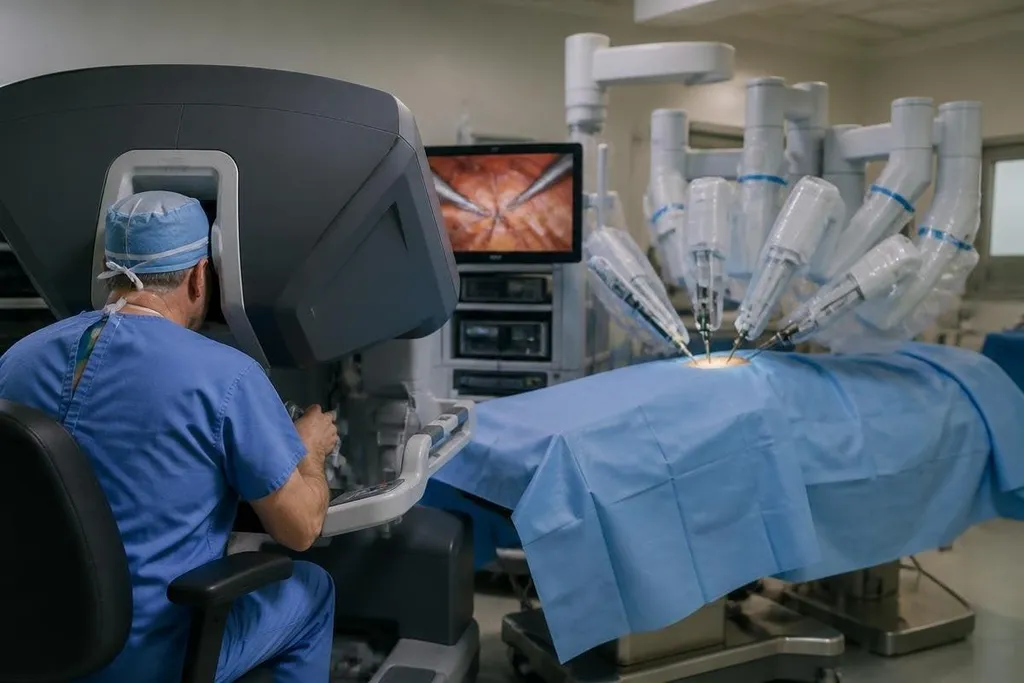
A surgical robot does not replace the surgeon. It gives the surgeon a console, a camera, and instrument arms that can move through small openings in the body. That setup is changing how some operations are planned and performed, while leaving cost, training, and proof of better results as open issues.
- Surgeon-controlled instruments, not independent machines
- Small incisions with a close view of the work area
- Benefits and risks vary by operation and hospital
What the robot actually does
The surgeon sits at a console and controls the robot’s arms with hand controls and foot pedals. The system sends those movements to small instruments inside the patient, so the surgeon works from outside the sterile field.
A camera sends an enlarged view to the console. Many systems offer a 3D image, which can help the surgeon judge depth while working around tissue, blood vessels, or other organs. The instrument tips can also bend and rotate inside the body in ways that straight tools cannot.
The software can filter small hand tremors and scale movement. A larger hand motion at the console can become a smaller instrument movement inside the patient. That can help with fine work, but it does not remove the need for surgical judgment.
The robot follows commands. It does not decide where to cut, choose a treatment, or take responsibility for a complication in standard robot-assisted surgery.
Why hospitals use robot-assisted surgery
Small openings can mean less tissue movement during some procedures. That may support a shorter recovery for some patients, but the result depends on the operation, the patient’s condition, and the surgeon’s method.
The camera and wristed instruments can help when the work area is deep or hard to reach with straight tools. A surgeon can control the view, adjust the instrument angle, and move between several arms without handing tools across the operating table.
These features matter most when they solve a clear problem. A robot may help with careful stitching deep inside the body, yet add little value for an operation that already works well with standard tools. The word “robot” does not make every procedure better.
A hospital robot’s value depends on the procedure and the surgeon’s role, with results measured after surgery. Robot24.com can tie those facts to wider robotics work, so the comparison starts with evidence rather than the label.
That coverage helps place hospital robots beside the wider field of autonomous systems without treating every demonstration as clinical proof.
Where the limits show up
A surgical robot needs trained staff, planned setup, and a room that can fit the equipment. The hospital also needs service contracts, instrument supply, cleaning procedures, and a plan for faults during an operation.
Training takes time because the surgeon works through a console rather than holding the instrument directly. The team must learn the controls, camera work, arm placement, and emergency steps. Nurses and technicians need their own training because the robot changes how tools move around the operating table.
Cost is another constraint. The purchase price is only one part of the bill. Hospitals also pay for instruments, service, training, room changes, and time spent preparing the system. The system can make financial sense for a busy service line, but the answer depends on use and local costs.
Evidence also needs careful reading. A robot-assisted operation may reduce blood loss or shorten recovery in one procedure, while showing little difference in another. The fair comparison is the same operation with a trained team using another accepted method.
A practical choice for hospitals
Before a hospital approves a system, its surgical and finance teams should check:
- Name the procedures that may gain from the robot, and record why.
- Count expected cases instead of relying on a broad growth forecast.
- Price instruments, service, training, room changes, and staff time.
- Set a plan for open surgery or standard laparoscopy if the robot cannot continue.
- Track recovery time, complications, readmissions, and total cost by procedure.
That checklist keeps the purchase tied to patient care rather than a machine count. I’d wait when a hospital cannot name the procedures, team, and outcome measures that justify the system.
The next step is better evidence by procedure. Surgical robots will earn a lasting place in medicine when hospitals can show where the added control improves care enough to cover the added cost.